
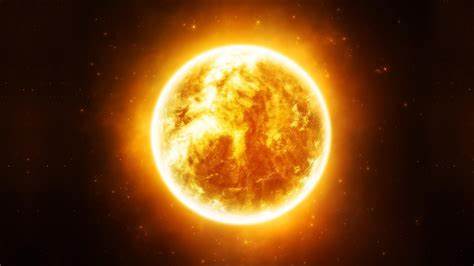
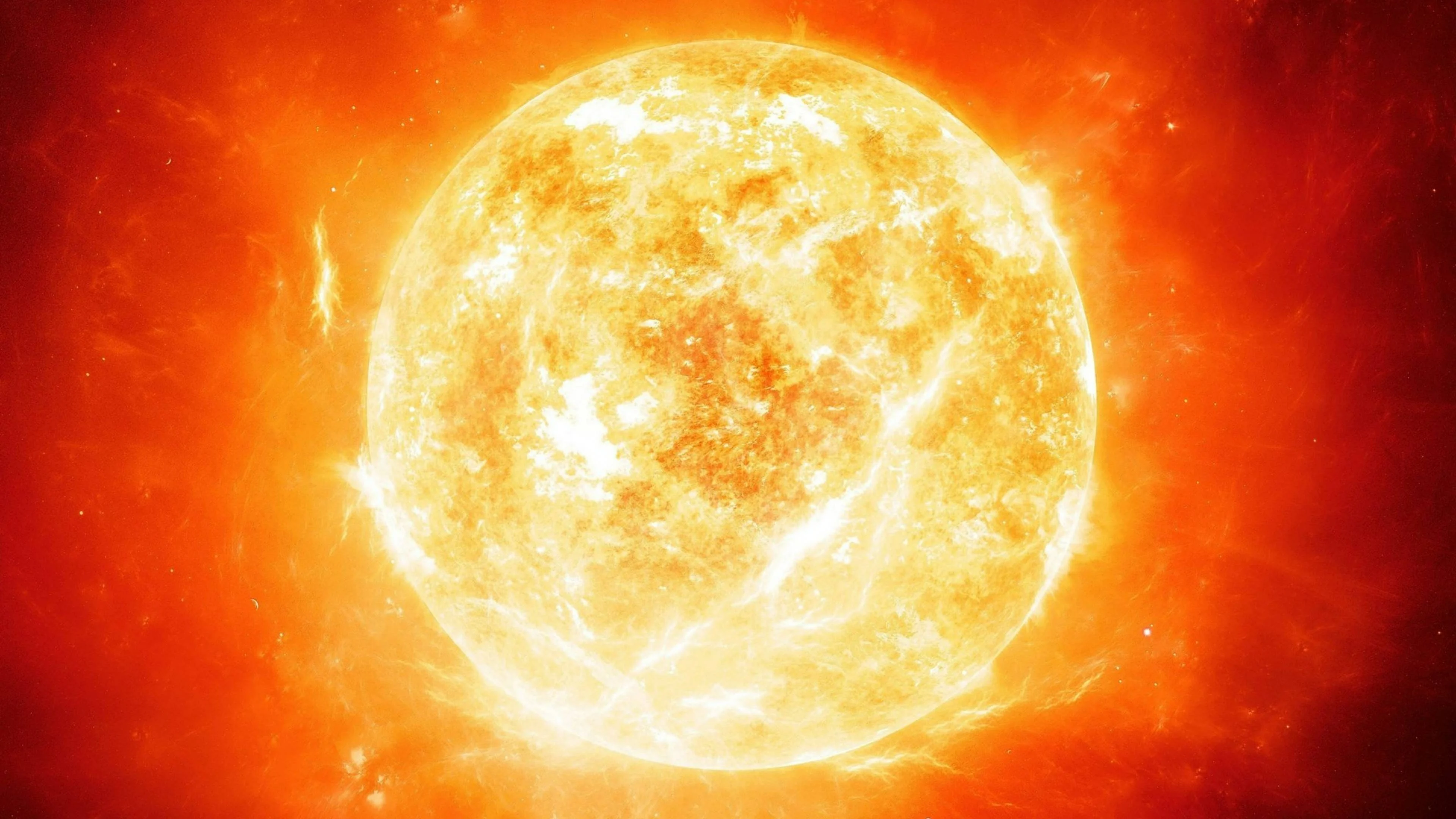

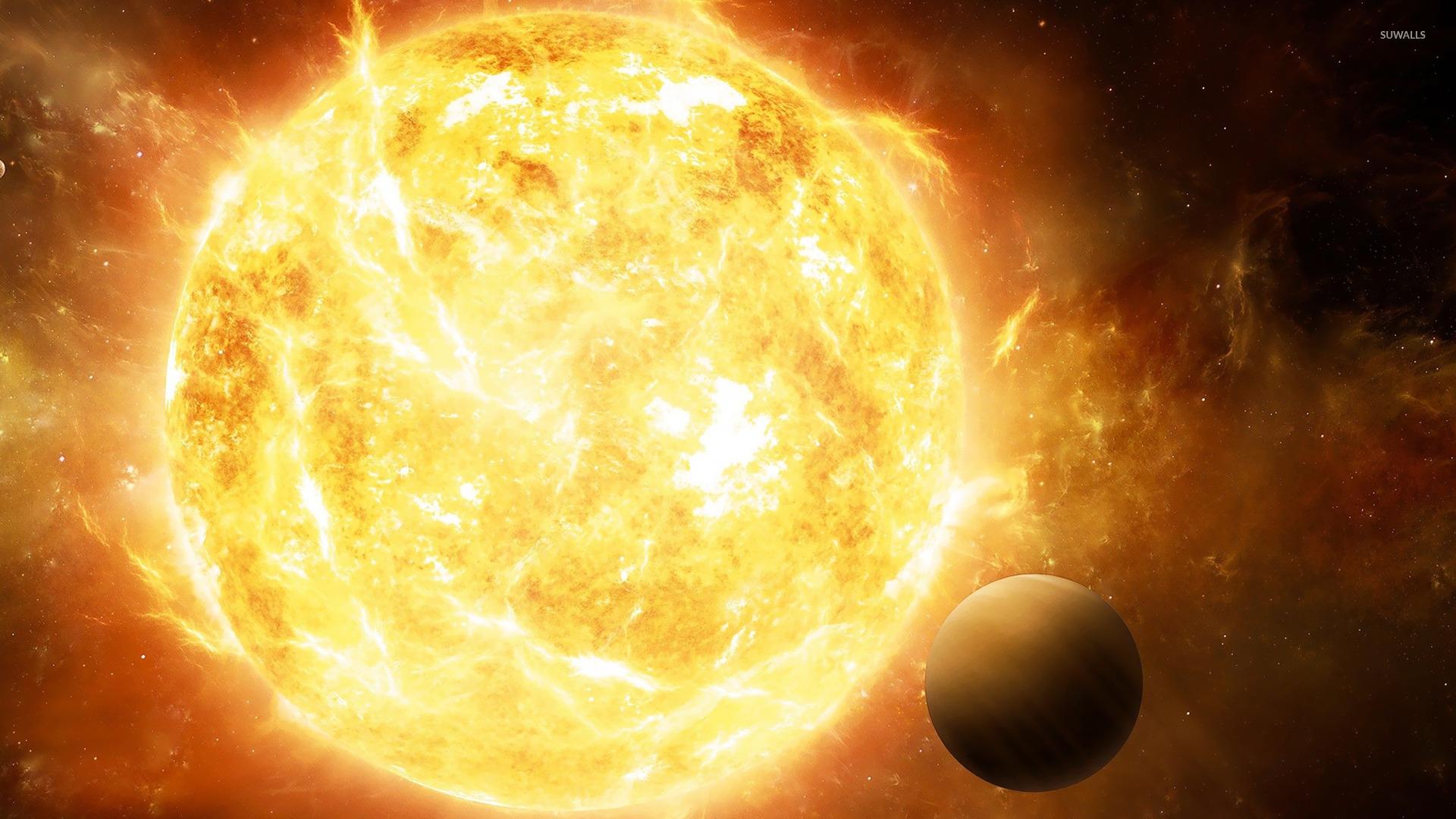
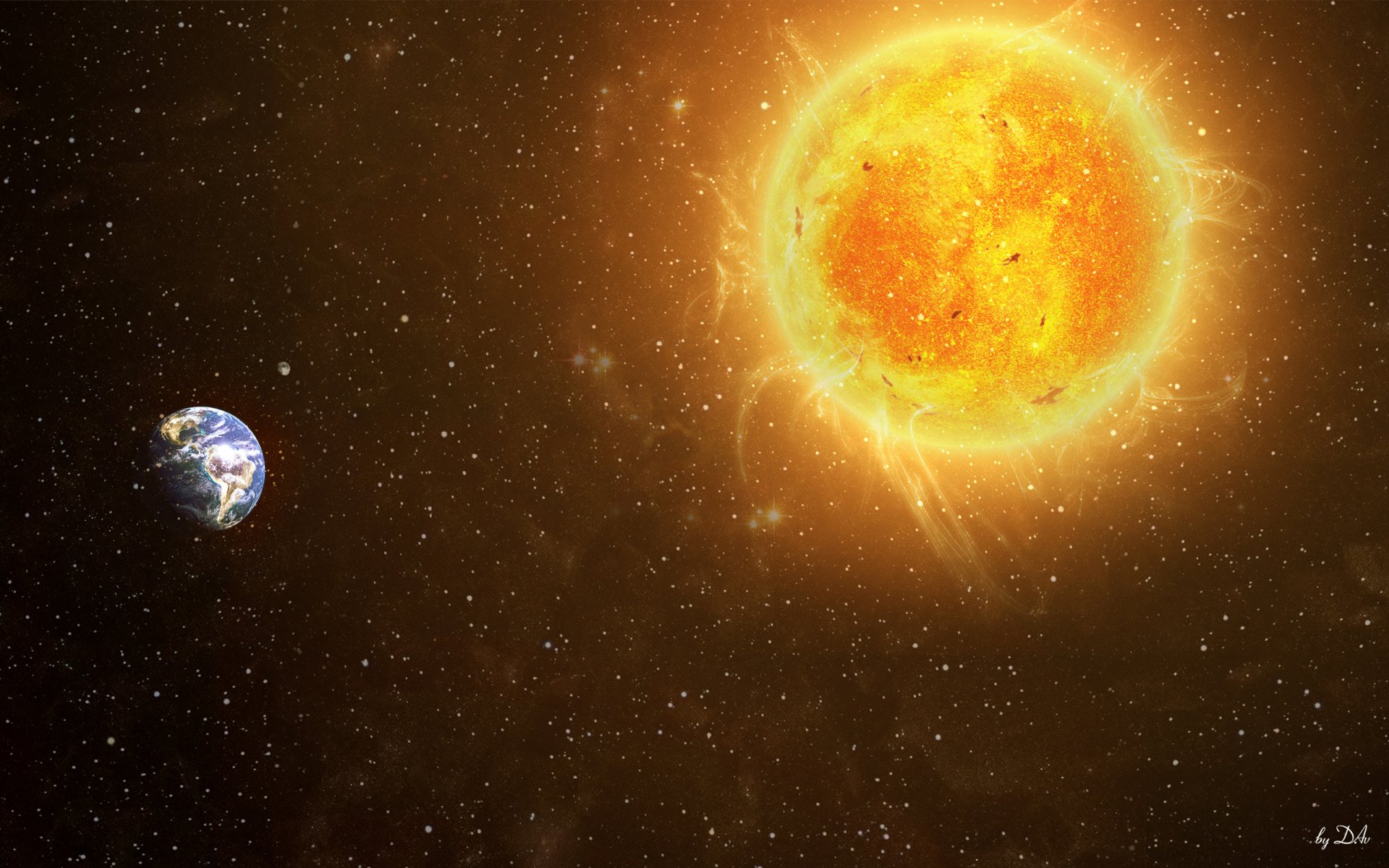
The Sun is the star at the center of the Solar System. It is a nearly perfect sphere of hot plasma, with internal convective motion that generates a magnetic field via a dynamo process. The Sun is by far the most important source of energy for life on Earth.
The Sun is a luminous, celestial body that serves as the central and dominant source of energy for the solar system. It is a G-type main-sequence star, commonly referred to as a yellow dwarf, and is located at the heart of our solar system. The Sun's immense gravitational pull keeps all the planets, including Earth, in orbit around it.
With a diameter of about 1.4 million kilometers, the Sun is approximately 109 times the diameter of Earth. Its mass is around 330,000 times that of Earth, accounting for about 99.86% of the total mass of the entire solar system. The Sun is primarily composed of hydrogen (about 74% by mass) and helium (about 24% by mass), with trace amounts of heavier elements.
The Sun's energy is produced through a process called nuclear fusion that occurs in its core. High temperatures and pressures in the core cause hydrogen atoms to fuse and form helium, releasing an enormous amount of energy in the process. This energy, in the form of light and heat, is then radiated into space, providing the necessary conditions for life on Earth.
The Sun's surface, known as the photosphere, has an average temperature of about 5,500 degrees Celsius (9,932 degrees Fahrenheit). Sunspots, cooler and darker areas on the photosphere, are caused by the Sun's magnetic activity and occur in cycles that last approximately 11 years.
Beyond the photosphere, the Sun has outer layers such as the chromosphere and the corona. The corona, extending millions of kilometers into space, is visible during solar eclipses. Despite its high temperature, the corona's energy is spread out, making it appear faint compared to the photosphere.
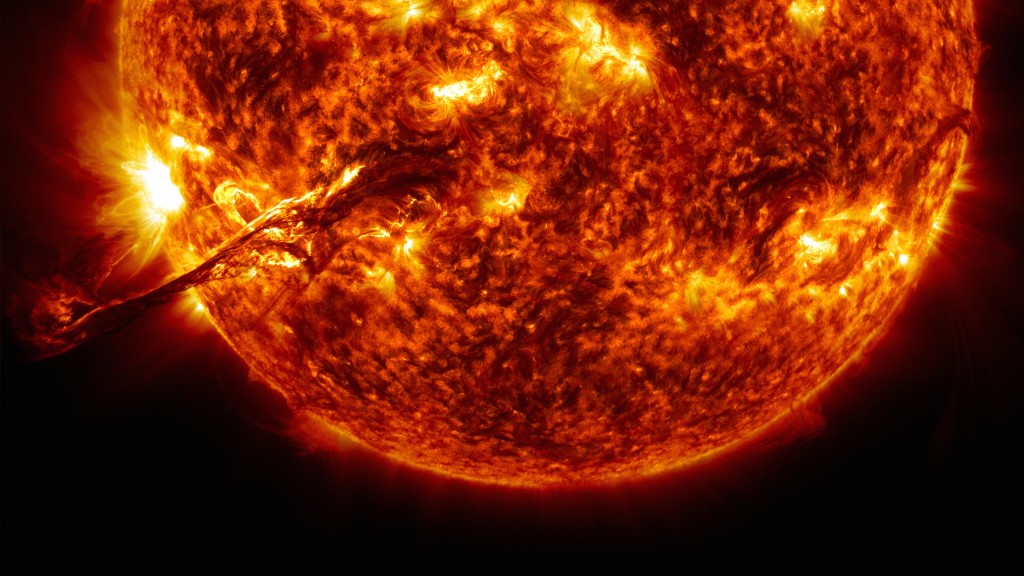
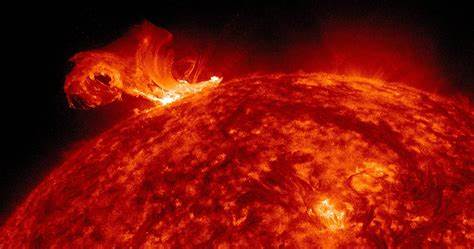
Solar flares and coronal mass ejections (CMEs) are powerful and sometimes disruptive events on the Sun. These phenomena release vast amounts of energy and charged particles into space, impacting the Earth's magnetosphere and causing geomagnetic storms.
The Sun has a profound influence on the Earth's climate and weather. The solar energy it emits drives the planet's atmospheric and oceanic circulation patterns, influencing temperature, wind, and precipitation. Understanding the Sun's behavior is crucial for predicting space weather and mitigating potential impacts on technological systems.
In conclusion, the Sun is a fascinating and essential celestial body that sustains life on Earth through its energy output. Its intricate processes, dynamic behavior, and significant influence on our solar system make it a subject of continual scientific exploration and discovery.