The formation of the Indian Space Research Organisation (ISRO) traces back to the visionary leadership of Dr. Vikram Sarabhai. Established on August 15, 1969, ISRO was born out of a strategic vision to harness space technology for the socio-economic development of India. Dr. Sarabhai, often regarded as the father of the Indian space program, recognized the potential of space applications in areas such as communication, weather forecasting, and resource management. Under the guidance of Dr. Sarabhai, the Indian National Committee for Space Research (INCOSPAR) was set up in 1962, laying the foundation for ISRO. The committee conducted pioneering experiments in space research, culminating in India's first satellite, Aryabhata, launched by the Soviet Union in 1975. However, it was the formal establishment of ISRO in 1969 that marked the beginning of a dedicated national space agency. ISRO's early years were marked by the development of indigenous satellite launch vehicles, leading to the successful launch of the Satellite Launch Vehicle (SLV) and the deployment of India's first satellite, Rohini, in 1980. This marked a crucial step toward self-reliance in space technology. Over the decades, ISRO's mission evolved from establishing a space program to addressing the country's diverse needs, including telecommunications, remote sensing, and planetary exploration. Today, ISRO stands as a symbol of India's technological prowess and continues to contribute significantly to both national development and global space exploration efforts.
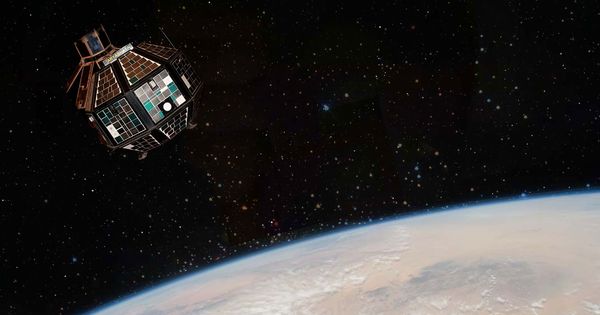
Aryabhata, India's first satellite, holds a significant place in the history of the Indian Space Research Organisation (ISRO). Launched on April 19, 1975, Aryabhata marked India's entry into the realm of space exploration. The satellite was named after the ancient Indian mathematician and astronomer Aryabhata, symbolizing the fusion of India's rich scientific heritage with its modern space ambitions. Weighing 360 kilograms, Aryabhata was an experimental satellite designed for scientific and technological research. It carried instruments to conduct experiments in X-ray astronomy and aeronomy, providing valuable data about cosmic X-ray sources and the Earth's upper atmosphere. Although Aryabhata experienced a power failure after a few days in orbit, limiting its operational lifespan, the mission laid the groundwork for future endeavors and demonstrated India's capabilities in space technology. The successful launch of Aryabhata marked a crucial milestone for ISRO, setting the stage for subsequent satellite missions and contributing to the organization's growth and expertise in space exploration. The satellite's legacy endures as a symbol of India's determination to explore the frontiers of space for scientific discovery and technological advancement.
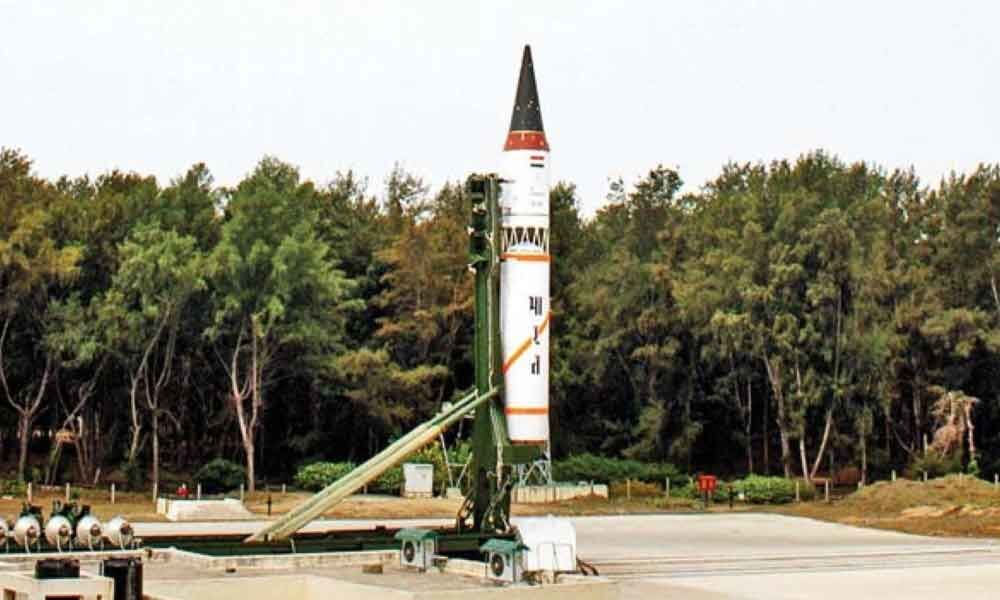
The Satellite Launch Vehicle (SLV) and the Rohini satellite represent pivotal components in the early history of India's space program, both contributing significantly to the establishment of the Indian Space Research Organisation (ISRO). The SLV, India's first indigenously developed launch vehicle, marked a crucial step in achieving self-reliance in space technology. It was designed to transport payloads into low Earth orbit and was instrumental in placing satellites into space. On August 10, 1979, the SLV made its maiden flight, carrying the Rohini Satellite into orbit. The Rohini satellite, also known as Rohini-1, was India's first satellite to be placed into space by an Indian-made launch vehicle. Launched into orbit on that historic day, Rohini-1 was primarily a scientific satellite aimed at Earth observation and research. This achievement demonstrated India's capability to design, build, and launch satellites independently. The success of the SLV and Rohini-1 mission solidified India's position in space exploration, fostering a sense of national pride and paving the way for subsequent advancements. The launch vehicle technology developed during this period laid the foundation for future endeavors, including the deployment of communication and Earth observation satellites that have since become integral to various aspects of everyday life. In summary, the SLV and Rohini satellite mission of 1979 marked significant milestones in India's space journey, showcasing the nation's growing prowess in space technology and setting the stage for the remarkable achievements that would follow in the decades to come.
The Indian National Satellite System (INSAT) and Indian Remote Sensing (IRS) are two key satellite programs operated by the Indian Space Research Organisation (ISRO). These initiatives play pivotal roles in advancing India's capabilities in communication, broadcasting, meteorology, and Earth observation. INSAT, initiated in 1983, focuses on communication and meteorology. It comprises a series of multipurpose geostationary satellites that provide services like broadcasting, telecommunications, meteorology, and disaster warning. The INSAT system has significantly improved India's communication infrastructure, facilitating better connectivity and information dissemination across the country. On the other hand, the IRS program, launched in 1988, is geared towards Earth observation. The IRS satellites are equipped with advanced sensors to monitor and collect data on various aspects of the Earth's surface. This includes agriculture, forestry, water resources, urban planning, and disaster management. The information gathered from IRS satellites has proven instrumental in resource management, environmental monitoring, and supporting various developmental activities. Both INSAT and IRS programs underscore ISRO's commitment to leveraging space technology for societal benefits. These initiatives have not only bolstered India's self-reliance in space technology but have also contributed significantly to addressing real-world challenges such as natural disasters, agricultural planning, and environmental management. Through continuous advancements and expansions, ISRO continues to enhance these satellite programs, fostering technological innovation and supporting India's development goals.

Chandrayaan-1, India's first lunar probe, marked a significant milestone in the country's space exploration efforts. Launched by the Indian Space Research Organisation (ISRO) in October 2008, Chandrayaan-1 aimed to explore the Moon and enhance our understanding of its geological and mineralogical characteristics. Equipped with eleven scientific instruments, including a Moon Impact Probe (MIP), the spacecraft carried out a meticulous study of the lunar surface. Chandrayaan-1's payload included instruments such as the Moon Impact Probe, Moon Impact Probe, Terrain Mapping Camera, and Moon Impact Probe, which collectively gathered data on the Moon's topography, mineral composition, and exosphere. One of Chandrayaan-1's notable achievements was the discovery of water molecules on the lunar surface. The Moon Impact Probe, released by the spacecraft, made a controlled descent and transmitted crucial data before impact. This finding of water molecules offered valuable insights into the Moon's geological history and opened up possibilities for future lunar exploration and resource utilization. Chandrayaan-1 operated until August 2009, and its mission was concluded prematurely due to a communication failure. Despite this, the wealth of data collected during its operational phase significantly contributed to the global understanding of the Moon's composition and its evolution. Chandrayaan-1 laid the foundation for subsequent lunar missions, including the more ambitious Chandrayaan-2, showcasing India's growing prowess in space exploration and scientific research.
Mangalyaan, officially known as the Mars Orbiter Mission (MOM), stands as India's historic foray into interplanetary exploration. Launched by the Indian Space Research Organisation (ISRO) in November 2013, Mangalyaan aimed to explore Mars and demonstrate India's capability to undertake complex interplanetary missions. Mangalyaan's primary objectives included studying Martian surface features, morphology, mineralogy, and the Martian atmosphere. The spacecraft, equipped with five scientific instruments, including a methane sensor, color camera, and thermal infrared spectrometer, gathered crucial data to enhance our understanding of the Martian environment. Notably, Mangalyaan made India the first Asian nation to reach Martian orbit and the first nation globally to do so in its maiden attempt. Achieving this feat within a tight budget and schedule underscored India's efficiency in space missions. The mission also showcased ISRO's technological prowess in developing and executing complex space exploration endeavors. Mangalyaan's success had a significant impact on India's standing in the global space community, solidifying its reputation as a reliable and cost-effective space exploration partner. The mission's findings, including the detection of dust storms and the presence of deuterium on Mars, contributed valuable insights to the global scientific community's understanding of the Red Planet. Mangalyaan exemplifies India's commitment to pushing the boundaries of space exploration and has paved the way for future interplanetary missions.
Gaganyaan project envisages demonstration of human spaceflight capability by launching crew of 3 members to an orbit of 400 km for a 3 days mission and bring them back safely to earth, by landing in Indian sea waters. The project is accomplished through an optimal strategy by considering inhouse expertise, experience of Indian industry, intellectual capabilities of Indian academia & research institutions along with cutting edge technologies available with international agencies. The pre-requisites for Gaganyaan mission include development of many critical technologies including human rated launch vehicle for carrying crew safely to space, Life Support System to provide an earth like environment to crew in space, crew emergency escape provision and evolving crew management aspects for training, recovery and rehabilitation of crew. Various precursor missions are planned for demonstrating the Technology Preparedness Levels before carrying out the actual Human Space Flight mission. These demonstrator missions include Integrated Air Drop Test (IADT), Pad Abort Test (PAT) and Test Vehicle (TV) flights. Safety and reliability of all systems will be proven in unmanned missions preceding manned mission. Human rated LVM3 - HLVM3 LVM3 rocket - The well proven and reliable heavy lift launcher of ISRO, is identified as the launch vehicle for Gaganyaan mission. It consists of solid stage, liquid stage and cryogenic stage. All systems in LVM3 launch vehicle are re-configured to meet human rating requirements and christened Human Rated LVM3. HLVM3 will be capable of launching the Orbital Module to an intended Low Earth Orbit of 400 km. HLVM3 consists of Crew Escape System (CES) powered by a set of quick acting, high burn rate solid motors which ensures that Crew Module along with crew is taken to a safe distance in case of any emergency either at launch pad or during ascent phase.
Chandrayaan-2 is India's second lunar exploration mission, launched by the Indian Space Research Organisation (ISRO) on July 22, 2019. The mission aimed to further explore the Moon, with a particular focus on the lunar south pole, a region not extensively studied before. The spacecraft consisted of three components: the Orbiter, the Vikram lander, and the Pragyan rover. The Orbiter, equipped with advanced scientific instruments, continues to orbit the Moon and collect data, including high-resolution images. The Vikram lander was designed to make a soft landing near the south pole, carrying the Pragyan rover for surface exploration. Unfortunately, the lander lost communication during its descent on September 6, 2019, and its precise location remained unknown for some time. Despite the setback, the Orbiter successfully continued its mission and has provided valuable data on lunar geology, mineral composition, and exosphere characteristics. Chandrayaan-2 represented a significant technological achievement for India, showcasing the country's capabilities in space exploration. The mission aimed to enhance our understanding of the Moon's geological evolution and contribute to the global scientific community's knowledge of Earth's natural satellite. While the lander's communication loss was a disappointment, the Orbiter's continued success has allowed India to build on its space exploration expertise and lay the foundation for future lunar missions.
Chandrayaan-3 is India’s third lunar exploration mission, following Chandrayaan-1 and Chandrayaan-2. Chandrayaan 3 is completely made with Indian technology. India launched Chandrayaan-3 at 2.35 pm on 14 July from Satish Dhawan Space Centre in Sriharikota, Andhra Pradesh. Chandrayaan 2 carried a lander and a rover. Similarly, Chandrayaan 3 also has a lander and a rover. Along with this, an orbiter has also been placed with the lander and rover. All three things have their own importance. The task of the lander will be to successfully land the vehicle on the moon. The rover will discover many things by staying on the surface of the moon. The module will take about a month to reach the moon from the time of launch. India became the fourth nation to land on the moon after the US, China, and Russia. Chandrayaan 3’s lander Vikram having landed on the South Pole of the Moon, India became the first nation. The purpose of Chandrayaan-3, India’s third lunar exploration mission, is to continue the country’s efforts to study the Moon and expand its understanding of lunar geology, mineralogy, and surface features. The budget of the Chandrayaan-3 mission was about 615 crores. Prime Minister Narendra Modi named the Vikram rocket landing site “Shiv Shakti” point. As the Vikram lander landed on the moon on August 23, it was declared as “National Space Day”. The younger generation will be inspired to pursue science, technology, engineering, and mathematics careers by this mission. All countrymen are proud of this success of the country.